
How Advanced Manufacturing Is Changing the Way Businesses Develop New Products
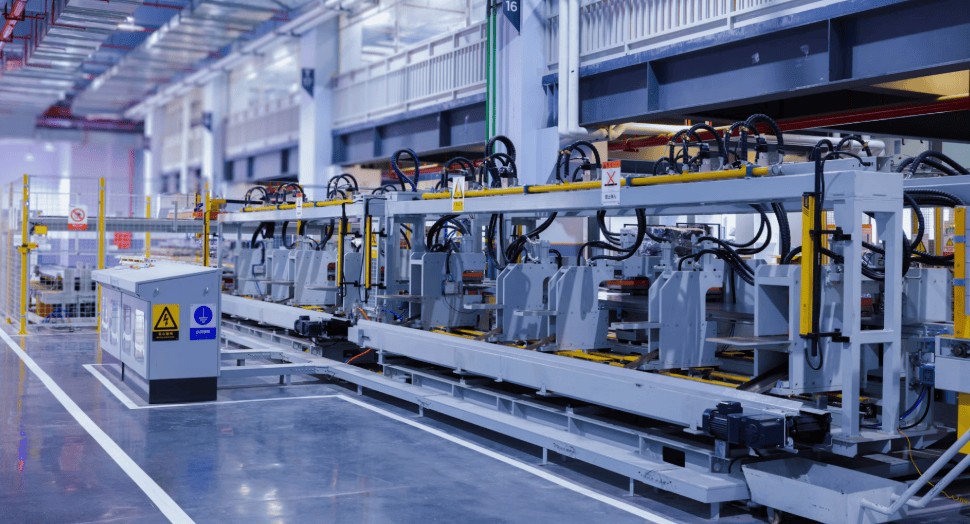
Image Credit: Unsplash
Advanced manufacturing is shortening the distance between a product idea and a reliable production run. Digital design tools, precise fabrication methods, and connected quality systems now let businesses test concepts earlier, quickly identify problems, and produce complex parts more consistently. As the advanced manufacturing guide from TWI explains, the term covers a broad mix of processes, technologies and organisational practices. For product teams, these capabilities can change both what they develop and how they manage the work.
Contents
Better prototypes arrive sooner
Traditional product development often involved long waits for tooling, followed by expensive changes if the first physical sample revealed a design flaw. Modern manufacturing methods reduce that delay. Engineers can move from a digital model to a functional prototype in days, depending on its material and complexity.
Faster prototypes give teams more opportunities to test dimensions, assembly methods, and user interaction before committing to volume production. For example, a medical device business might compare several versions of a tiny internal component in a single development phase. Each test can reveal whether the part fits correctly, performs consistently, and can be produced at the required scale.
The practical lesson is simple: plan several focused prototype rounds instead of expecting one sample to answer every question.
Choosing a manufacturing partner earlier
Manufacturing expertise is more valuable when it enters the project before the design is fixed. Early discussions can expose features that may be costly, slow, or difficult to reproduce consistently. Small changes to a bend, opening, or material thickness can significantly affect production time and unit cost.
Businesses developing intricate components for life sciences, medical, and surgical applications can involve specialists like Tecan during prototyping and co-development. Its precision manufacturing services include photochemical machining, metal etching, and component manufacturing for applications that require intricate, burr-free, stress-free parts.
When assessing a potential partner, ask about achievable tolerances, prototype lead times, material options and the route from sample approval to repeat production. Clear answers help prevent redesign work later.
Digital tools connect design and production
Cloud-based design platforms and shared product data make collaboration easier across engineering, manufacturing and quality teams. Instead of passing static files between departments, businesses can maintain a controlled design record that shows dimensions, revisions, and approval status, improving operational efficiency throughout product development.
Simulation tools add another useful layer. A team can model heat, movement, fluid flow, or structural stress before producing a physical sample. These models won’t eliminate the need for real testing, but they can identify weak points and narrow the designs that reach the prototype stage.
Quality becomes part of development
Connected inspection systems allow manufacturers to collect measurement data throughout production. Product teams can use that information to see whether a process remains stable, where variation appears, and which design details create repeated difficulties.
This feedback supports a more practical relationship between design and quality control. For instance, if a feature repeatedly sits close to its tolerance limit, the team can adjust the design or process before output increases. That’s far less disruptive than discovering the issue after thousands of units have been made.
The future of manufacturing will increasingly rely on automation, data analysis, and connected equipment. Businesses should still focus on useful measures, such as defect rates, inspection time and first-pass yield, instead of collecting data without a defined purpose.
Image Credit: Unsplash
The product team is changing, too
New equipment alone won’t improve product development if departments keep working in isolation. Designers need a basic understanding of production limits, procurement teams need visibility of technical requirements, and manufacturing partners need clear information about the product’s intended use.
The strongest development process treats manufacturing information as design evidence. When prototype results, inspection data, and supplier input feed into the next revision, a product becomes easier to produce and better suited to its purpose. That link between design intent and repeatable production is where advanced manufacturing delivers its most lasting value.